Skip to content

Pelé: Why Soccer Matters, Part 1

by Kim Haas

We are hours away from the beginning of the 2014 FIFA World Cup. With 32 nations participating, the World Cup is the most popular sporting event on the planet.  World Cup attendance is expected to reach 3.7 million people with an estimated 3.6 billion viewers.  Held every four years, Brazil plays host to this year’s games in 12 cities across the nation including: São Paulo, Salvador and Rio de Janeiro.
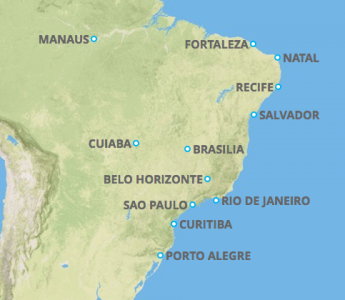
Brazil Host Cities

Brazil Host Cities

Connecting to the big game, los afro-latinos presents information about the game’s most popular and prolific player – Pelé (Edson Arantes do Nascimento).  Pelé began playing professional soccer at the age of 15 and joined the Brazilian national soccer team a year later. He’s an Afro-Brazilian who grew up in economic poverty in Bauru, Brazil.

His career spanned 2 decades. During that time, he won three FIFA World Cups, 1958, 1962 and 1970 and is the only player with that distinction. Pele’s honors are too many to cite here.  Two of them are: (1) he was declared a National Treasure by Brazil and (2) he was designated the best FIFA scorer, scoring 1281 goals in 1363 games.  Rumor has it that during the 1960’s 2 warring Nigerian factions agreed to a cease fire so they could watch Pele play in Lagos.

Pelé was magic in the air, flying vertically and horizontally, dazzling fans with his athleticism, quick thinking, field vision, power and passion for the game.  He’s credited with coining the term “o jogo bonito” (the beautiful game) when referring to soccer.

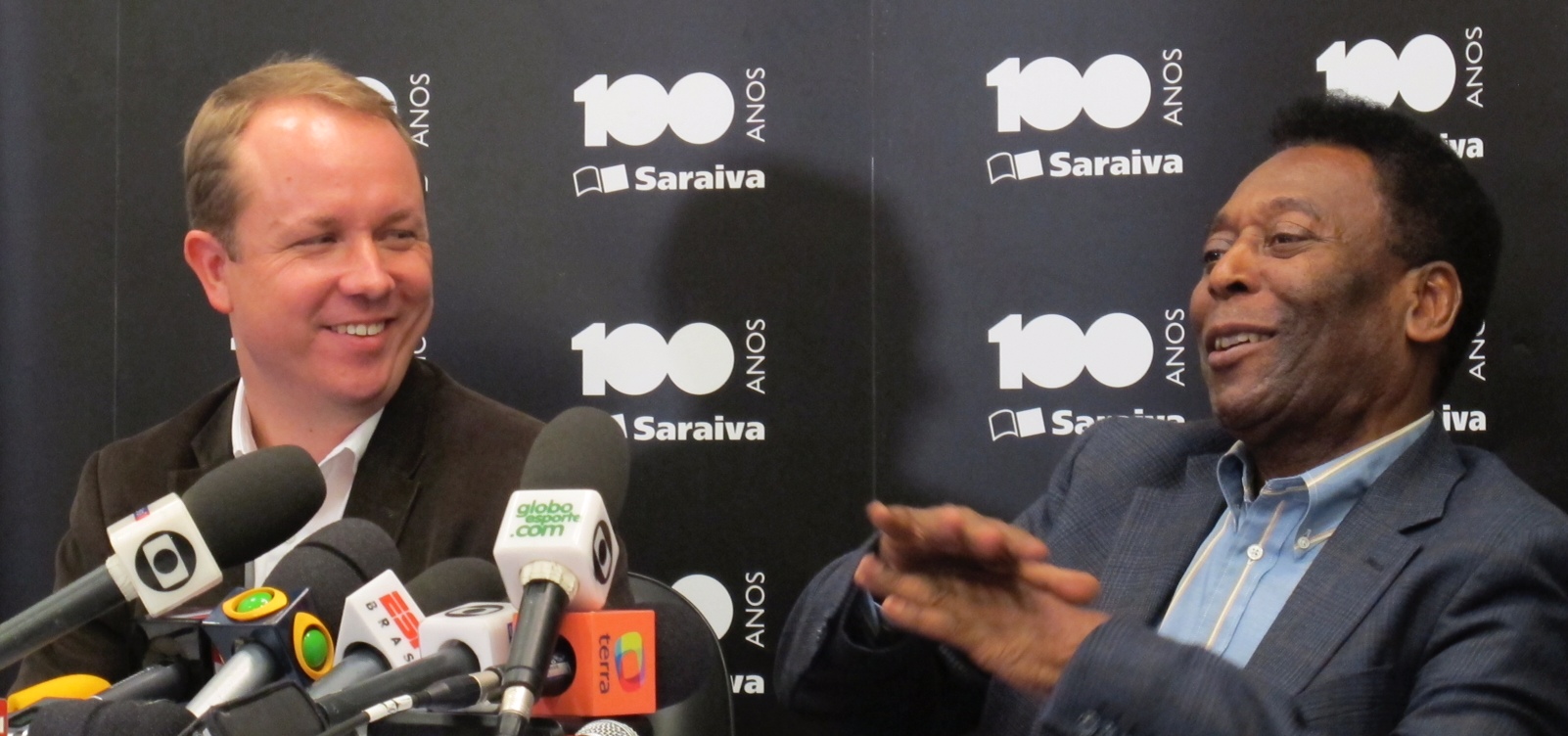
In this 2 part series, los afro-latinos spoke with writer Brian Winter, co-author with Pelé of the recently published book, “Pelé,“Why Soccer Matters.” Our conversation explores Pelé’s deep admiration for his father, his love for soccer and Pelé’s position as a global icon and role model.
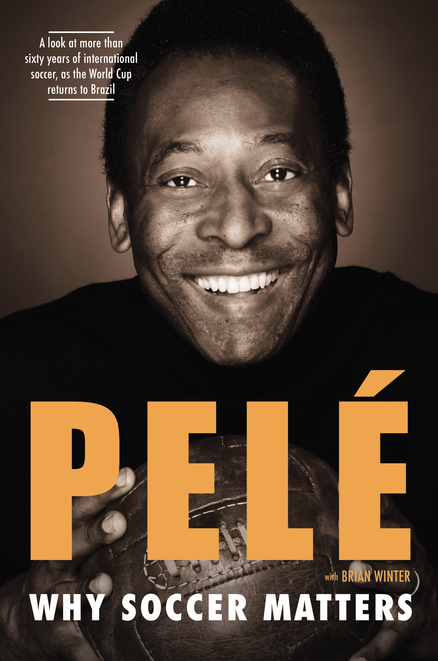
Pelé: Why Soccer Matters

Pelé: Why Soccer Matters


LAL: There are lots of media reports here in the United States about Brazil not being ready for this year’s World Cup. You’re in Brazil. Please share your thoughts. Is Brazil ready?

BW: Well they’re not ready. The stadiums, it appears, are going to be mostly done. I mean mostly. If you took all 12 stadiums and assigned a percentage it looks like we’re going to be 97, 98%. That’s just a guess. The important work (stadiums built) is done. Areas around the stadiums look like construction sites; not only in São Paulo but in Cuiabá, Curitiba, Natal and some of the other cities. I was at the São Paulo stadium yesterday before the last test match, before things opened up, and there were still missing chairs and the first game is in 10 days. As far as the various festivities, I suspect fans will be able to get in and see the game.

LAL: You’ve been in São Paulo, Brazil for a little more than 4 years. Brazil had 7 years to prepare for the World Cup. What are some of the reasons Brazil is not 100% ready?

BW: Part of the problem is what Brazil promised FIFA, the world and most importantly its own citizens, it would do, 7 years ago, when it first won the right to host this tournament. They (government) talked about using the World Cup as an opportunity to do a broad overhaul of dilapidated infrastructures. That was a general promise and then as recently as 2010 the government outlined all these building projects and airport improvements and other things. Some of those projects are going great but about half of them will not get finished in time for the Cup. So that’s a pretty high percentage of failing to deliver.

Brazil is not a country that has historically done big planning. It’s a country that relied on throwing a bunch of people at a problem, when it can’t quite finish the logistical planning and construction aspects. This is a problem in construction in general. And not just in sporting events. This was the case at the stadium I entered yesterday where there were all these issues with unfinished construction. And, there were literally hundreds of people, police, FIFA volunteers, other sort of groups set up by the local government standing around waiting to help. That’s historically the way things are kind of handled here and it looks like it’s probably going be the case with this event as well.

LAL: Where does Pelé stand in terms of how money is being spent for the World Cup?

BW: I can sort of describe what he’s said publicly. He’s been very critical (of the amount of money spent). And he was critical long before it was fashionable to be so here. Back in early 2011 he warned publicly that Brazil ran a risk of embarrassing itself during the Cup because of all these logistical problems. And at the time people kind of rolled their eyes at him and said, oh come on everything’s going to get sorted out. And here we are on the eve of the Cup and it’s not sorted out. It’s obvious that Brazil’s preparations are going to fall significantly short of what they were supposed to be.

LAL: For months, thousands of Brazilians have protested the government’s over spending on the World Cup and lack of investment in public services and infrastructure. Pelé has asked Brazilians not to protest during the Cup. Do you think that’s going to happen?

BW: No. The issues are too serious. There are groups of people (and labor unions) that are determined to go out and try to wreck this tournament. If that’s the mission, I don’t think they’ll succeed but they will disrupt. I have no doubt about that.

LAL: Have the police force and other security groups been trained to effectively deal with protest?

BW: I guess they have been trained. By Latin American standards certain police forces in Brazil can be quite disciplined. I mean that in a good way as a compliment to the police—but the spotlight here is going to be awfully bright and there’s going to be a lot of quite disturbing protesters. For that reason I fear that at least a few games are going to get pretty ugly.

LAL: Where will you be on June 12th ?

BW: I’m going to go as a civilian to at least one game and apart from that I’m going to be covering it as a reporter. And on the 12th I’m sure I’ll be in the writer’s office watching not so much the game, unfortunately to my distress as a soccer fan. I’ll be watching more from a news perspective looking at the protests and some of the things that are going on beyond the white lines (soccer field).

LAL: Do you have any predictions on what to expect during the games?

BW: I think there will be some significant logistical problems and the protests are going to get pretty ugly. I think most visiting fans will have a good time.
Pelé interview

Pelé and Brian Winter

Jacmel, Haiti’s Unshakable Carnaval

Several months ago, I announced that Los-Afrolatinos would “expand the tent” and cover not just Afro-Latinos but the larger African Diaspora as often as possible. Our current post focuses on Haiti; a country that captivates me. I’m inspired by its past, the first black republic in modern history, the resiliency, creativity and ingenuity of its people and its profound culture. With this post, I wanted to bring you another perspective of the island nation, beyond the doom and gloom so often reported. But rather, a look at how Haitians, despite seemingly endless challenges make room to create, celebrate and honor. I’m consistently inspired by how much Haitians accomplish despite a history which has been less than favorable. We can all gain strength by their sheer determination to persevere.

Jacmel’s 2014 Carnaval was covered for Los-Afrolatinos by freelance reporter, Amy Bracken. You can hear Amy’s work on Public Radio International, “The World,”  one of my favorite radio programs because of its’ in depth coverage of global issues, particularly those relating to Africa and Latin America.

Although we are publishing this post in May, Amy was in Jacmel in March for the town’s carnaval festivities. While this post is a bit behind schedule, I believe it’s right on time.

Enjoy Jacmel’s Carnaval!

Kim Haas, Founder


Read more

Dulce de Leche Brownie Recipe

Last week, we introduced you to Chef Leticia Moreinos Schwartz, in our post, The Best of Latin Baking. If after seeing the post, you were craving for one of those sweet treats, we have just the cure for you. Chef Leticia provided us with the scrumptious Dulce De Leche Brownie recipe, originally created by Pastry Chef David Lebowitz.  Enjoy!

Dulce de Leche Brownies

Yield: Serves 12

Ingredients
8 Tablespoons (120g) unsalted butter, cut into pieces, plus more for the pan
6 ounces (170g)  bittersweet chocolate
1/4 cup (30g) unsweetened cocoa powder
3 large eggs, at room temperature
1 cup (120g) sugar
1 teaspoon vanilla extract
1 cup (140g) flour
1 cup (250ml) dulce de leche

Pre-heat the oven to 350F. Grease an 8-inch square pan and line the bottom with parchment paper.

1. Melt the butter in a saucepan. Add the chocolate and stir constantly over low heat until melted. Remove from heat and whisk in the cocoa powder until smooth. Read more

Listen to Los Afro-Latinos on the Speaking to Harmony Radio Show

Did you miss the Speaking to Harmony Radio Show? Our founder Kim Haas was a part of a panel to discuss “The Other America – The Legacy and Struggle of Afro-Latin America” with the goal of widening the notion of the African Diaspora, and to discuss the cultural heritage of the Latin American region.

Don’t worry, the show has been archived and is available for you to listen to here.

The Panel
Melissa Valle- Columbia University
Kim Haas- LosAfrolatinos.com
Maconya – Florida International University
Zarena Leblanc- Florida International University
Denika Mays- Florida International University


Los Afro-Latinos on the Speaking to Harmony Radio Show

We are very excited to announce that our founder, Kim Haas, will be a part of a panel on the Speaking to Harmony Radio Show, which is organized by the Sisters in Harmony. Kim will be joining four other panelists, hosted by Sister Calhoun and Dr. Walls, to discuss “The Other America – The Legacy and Struggle of Afro-Latin America” with the goal of widening the notion of the African Diaspora, and to discuss the cultural heritage of the Latin American region.

We hope you will be able to listen in to the discussion. Feel free to call in with any questions or comments you have.

The Panel
Melissa Valle- Columbia University
Kim Haas- LosAfrolatinos.com
Maconya – Florida International University
Zarena Leblanc- Florida International University
Denika Mays- Florida International University

Date: Sunday February 16, 7-9 PM Eastern Standard Time
Bogota, and Cartagena, Colombia 7-9 PM
San Jose, Costa Rica 6-8 PM

Call-in Number:  917-889-7765

Find out more info on the Facebook event page and feel free to invite your friends. 

Chef David’s Sweet Potato Cornbread

In our recent post Welcome to Gullah Country! we interviewed Chef David Young, owner of Roastfish and Cornbread Restaurant in Hilton Head Island, South Carolina. Graciously, he agreed to share his recipe for sweet potato cornbread, one of the restaurant’s signature dishes. Enjoy!

If you make this wonderful recipe, tell us what you think and  share your photos with us on FacebookTwitter, or by linking to your own blog post in the comments section below.

Sweet Potato Corn bread
It took over a year to perfect this recipe. It is easier for me to make something just from feeling and tasting, rather than harnessing a flavor with words and writing them down, I had to test many different formulations and ingredients to find the perfect union of flavor and spice. After many taste tests, here it is. I wrote it just for you.

Dchefs’ Sweet Potato Corn bread™
I did not want to give you the same old corn bread, I was not satisfied with basic corn bread and I hated it because the flavor did not punch me in the taste buds. I wanted to make something that was unique so I took two traditional ingredients, corn meal and sweet potatoes and created a new taste sensation.

Read more

Hispanic Heritage Month: The African Contribution

by Kim Haas

One of my greatest pleasures is the study of Afro-Latino culture. In September, I had a wonderful opportunity to write about the African contribution to Hispanic Heritage for one of the oldest black newspapers in the United States, New York Amsterdam News. The newspaper, which was founded on a $10 investment more than a century ago, has a distinguished history of being at the forefront of covering major issues and events involving people of African descent.

What an honor to share the article with you!

Vicente Guerrero

Vicente Guerrero

Hispanic Heritage Month, Sept. 15 – Oct. 15, offers an opportunity to illuminate what is too often overlooked—the African influence and tradition in Hispanic culture. Today, approximately 150 million Latin Americans have some African ancestry.

For more than 500 years, Africans and their descendents richly contributed to the fabric of Latin American society. During the Middle Passage, an estimated 12 million enslaved Africans were shipped to the Americas. Of this group, less than 10 percent were brought to the United States. The overwhelming majority were transported to the Caribbean and Latin America, where they provided free labor under exceptionally brutal conditions. They worked on cattle ranches in Brazil, in mines in Colombia, on sugar plantations in Ecuador and in other areas throughout the region.

Read more

Los Afro-Latinos at LATISM 2013

LATISM 2013

We have very exciting news to share! Tomorrow (9/20), our founder, Kim Haas will be on the “Lets dare to talk about race in our Latino community” panel at this year’s Latinos In Social Media Conference in New York City. Along with Alicia Anabel, Dr. Georgina Falu, and Guesnerth Josue Perea, Kim will be discussing the following questions:

“Why is race such a taboo in our Latino community? Is there such a thing as racism among Latinos? Do we really really really treat each other equally? Are Afro-Latinos equally positioned in media or leadership? Let’s dare touch the core of the race issues with the help of experts in the field who are dedicating their lives to this issue.”

If you are in NYC and attending the conference, join the conversation from 10 – 11 a.m. in the Park Avenue Suite South. Even if you aren’t attending the conference, join in the conversation. Feel free to leave your thoughts on the above questions in the comments section below or join us on Facebook or Twitter.

Find out more info about the panel and conference.

1st Annual Afro Latino Festival of New York: Bringing People Together

by Kim Haas

Seeking to unite the diverse Afro-Latino populations, Tania Molina, a proud Garifuna, reached out to her friend Mai-Elka Prado, an Afro-Panamanian. Together, the two Afro-Latinas created the 1st Afro-Latino Festival of New York held Saturday, June 29 at Brooklyn’s Parkside Train Station Plaza.

In the United States, there are an estimated four million Afro-Latinos – the great majority of whom reside in the New York City area. From countries as different as Andean Peru and tropical Cuba, to the Garifuna population of Central America and to the innumerable descendents of Afro-Latinos who may have never set foot in their parents or grandparents homeland, this mega city of eight million is home to Latin America’s African Diaspora. 

Despite the diversity of Afro-Latinos in New York City, when there are gatherings and events, the focus is often on one particular group, nationality or concern like an Afro-Puerto Rican Bomba Performance or an Afro Colombian Land Rights Symposium. Rarely are there events focusing on Afro-Latinos as an entire group. Read more

An Afternoon with Dahlma Llanos-Figueroa [Event]

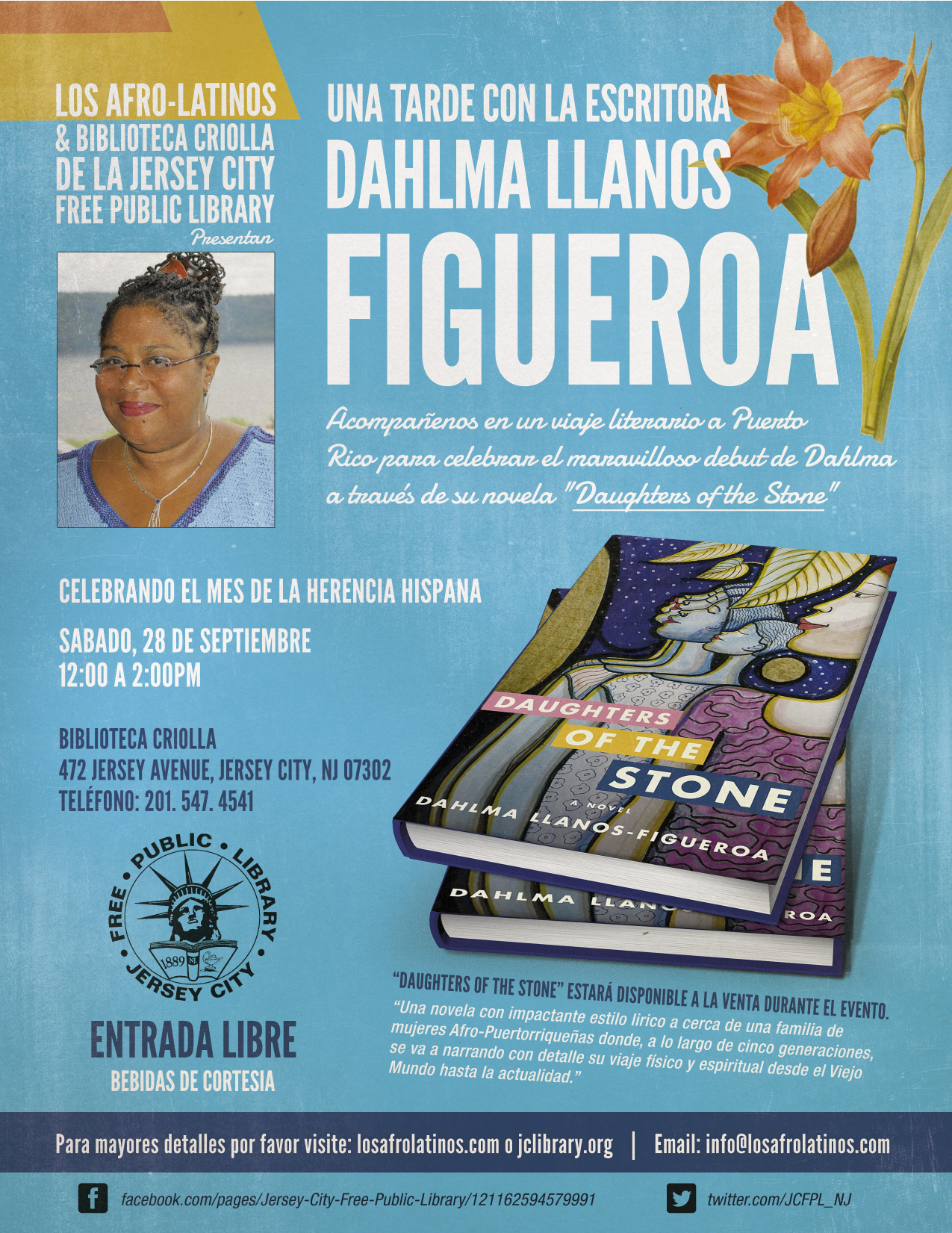
We are pleased to announce that our event with Dahlma Llanos-Figueroa has been rescheduled and will now take place on Saturday, September 28 from 12 – 2 p.m., and will be hosted at the Jersey City Free Public Library.

Los Afro-Latinos and Biblioteca Criolla of the Jersey City Free Public Library present: An Afternoon with Dahlma Llanos-Figueroa.

Join us on a literary journey as we celebrate Dahlma’s debut novel Daughters of the Stone.

Dahlma Llanos-Figueroa is an Afro-Puerto Rican and wrote Daughters of the Stone to share the rich legacy of African cultures in Puerto Rico. Read more about Dahlma and her motivation to write this novel here http://bit.ly/WSqzDs.

This event is FREE and open to the public. Refreshments will be served.

Date: Saturday, September 28, 2013
Time: 12 – 2 p.m.
Location: Jersey CityFree Public Library
Biblioteca Criolla
472 Jersey Ave.
Jersey City, NJ 07302

Dahlma Flyer English

Dahlma Spanish Flyer