ChocQuibTown: Afro-Colombian Band Strikes Gold from a Bountiful Rain

Our latest post for Being Latino features an interview with Goyo, lead singer of Colombian Hip Hop Band ChocQuibTown. To read the article, please visit: http://tinyurl.com/d62vhgs

Aug 1
Our latest post for Being Latino features an interview with Goyo, lead singer of Colombian Hip Hop Band ChocQuibTown. To read the article, please visit: http://tinyurl.com/d62vhgs
Sometimes it’s a bit tricky to encourage children to read, especially in today’s world when fierce competition comes from television, video games and everything and anything that can be found on the internet. However, we know that reading is powerful. Time spent with a book inspires imagination, creativity and increases literacy.
This post originated from an inquiry of a reader, Marisel. Last month she contacted Los Afro-Latinos for a listing of children’s books about Afro-Latinos. We were intrigued by the proposal. I reached out to Daniel Pizarro (in above photo), Head Librarian at Biblioteca Pública de Loíza (The Loiza Public Library) for recommendations. Considered the center of Puerto Rico’s African heritage, Loiza maintains strong cultural traditions originating with the island’s African descendants. Read more
I feel comfortable saying no individual in contemporary times embodied Puerto Rico’s history, its traditions, was more revered by his countrymen, or more closely associated with telling its story than the incomparable Don Ricardo Alegría.
This post honors Dr. Ricardo Alegria at the first year anniversary of his passing on July 7, 2012. He lived a long, accomplished life and deeply loved his homeland, Puerto Rico. To say his knowledge and memory of Puerto Rico, the island he called home for 90 years, was encyclopedic would be an understatement. Known as “The Father of Modern Puerto Rican Archaeology,” Don Ricardo Alegría spent his life exploring, investigating, researching, writing about Puerto Rico’s history, including its African legacy. Read more
When the widely popular online magazine Being Latino approached us with a partnership idea, we jumped at the chance to create content for such an entertaining and socially impactful site.
Being Latino will feature a story from Los Afro-Latinos on its website once a month. The hope is that our stories about the Afro-Latino community will help better inform and engage the Latino community.
You can find our first feature, “A Filmmaker’s Mission: Shining Light on Afro-Bolivian Invisibility” on the Being Latino Website. Look for exclusive content beginning in August.
So, you want to make a documentary film. Should be pretty easy, right? Just grab your camera, shoot, edit and you’re done. Not so fast. The multi-layered processes associated with making a film tends to be a bit more complicated and peppered with lots of starts and stops, especially financing issues. Plus everything else imaginable and some things you just can’t imagine.
In the world of filmmaking, taking on the untold story, the unimaginable and the unthinkable are often what makes film projects so incredibly appealing. Capturing history — whether its life’s smallest moments or biggest events– is often the attraction.
New Yorker Sisa Bueno, an adventurous Latina of African descent and a self-described political junkie, is learning first hand about the starts and stops of filmmaking. As a graduate of the prestigious New York University Film School, Sisa admits, “I had the naïve thought that documentaries were much easier than traditional fiction films, which is completely untrue.” Read more
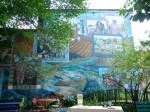
There’s a garden nestled on Palethorpe Street within North Philadelphia’s narrow, twisting roads. It’s called Las Parcelas. There are houses painted in vibrant yellows and blues dotting the landscape. The garden has carefully placed stepping-stones, hanging lights and colorful wall murals. There’s even a pit for pig roasting.
This is no ordinary garden. Formally, the space was occupied by 21 row houses and is now the home of 32 garden plots. It’s a product of the Norris Square Neighborhood Project (Norris Square), which has used its programming and six vast gardens to invigorate and feed the community for four decades. And on June 16, it was the site for Norris Square’s Festival de Bambulaé, a vivid garden celebration and fundraiser.
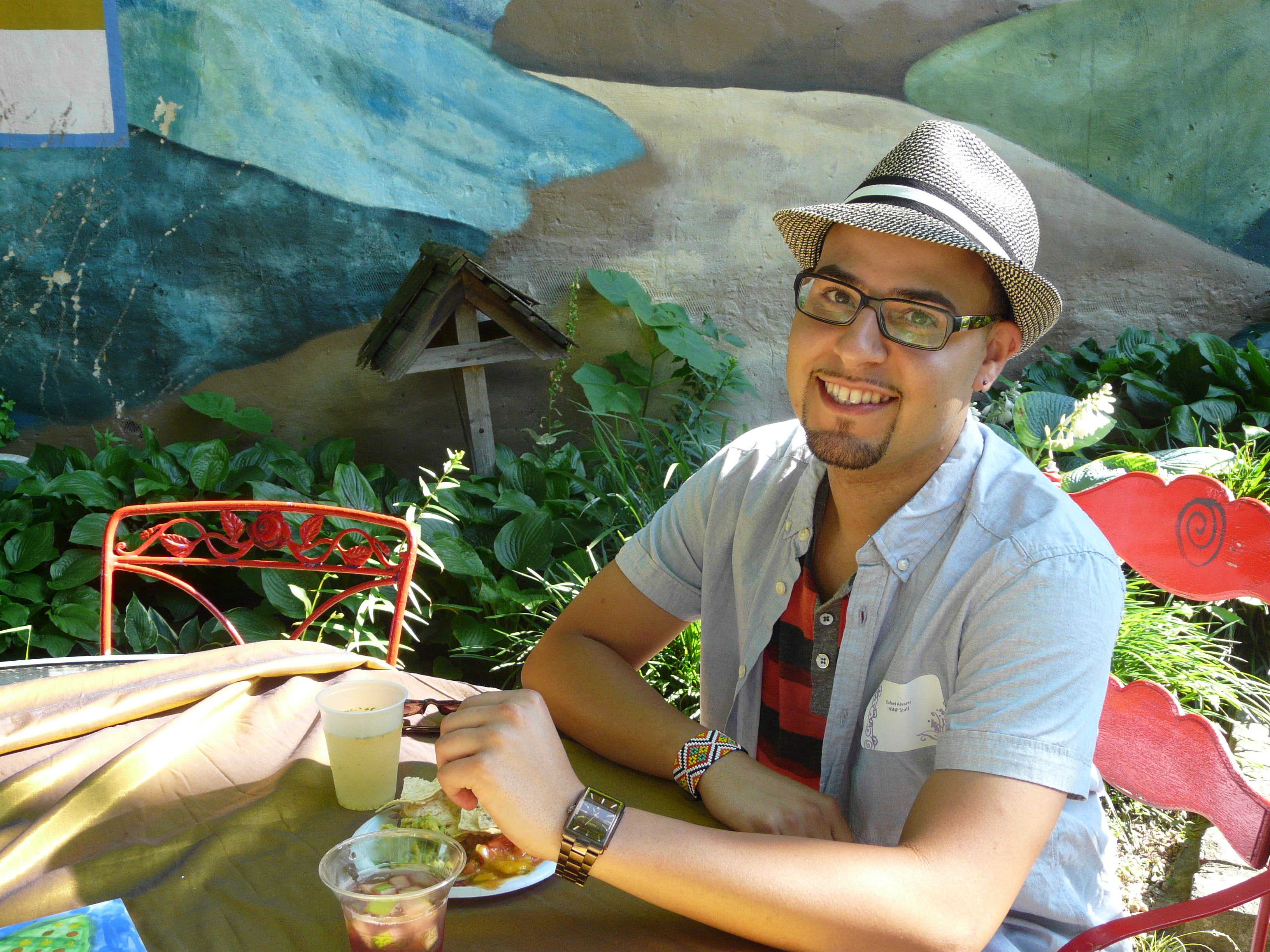
Rafael Álverez, Norris Square’s Director of Garden Programs.
“It’s an opportunity for the Puerto Rican community to share its culture with people throughout Philadelphia,” says Rafael Álverez, Norris Square’s Director of Garden Programs.
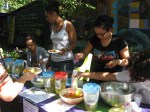
While youth leaders help community elders lay out table clothes, make guacamole and test microphones for the many Philadelphians to come celebrate later that day, it’s difficult to imagine what Norris Square’s gardens looked like 40 years ago.
“All of this area was houses and lots that were dilapidated, torn down and abandoned,” says Reed Davaz McGowan, Executive Director of Norris Square. “Demolition companies would come by and dump their trash here. Community members were depressed. It was a lot of violence, drugs and you’re taking people from this incredible Afro-Caribbean environment of Puerto Rico and all these colors and foliage and you’re putting them in a very urban environment where there’s cement and brick everywhere.”
Something had to be done to counter the violence, the trash dumping and the destruction families were experiencing. And that’s where Iris Brown and Tomasita Romero came in.
They started with some bright paint and a few flowers to bring the magic and beauty of Puerto Rico to Philadelphia. Romero received a fence through a partnership with the Pennsylvania Horticultural Society to keep the garbage out. And then they started planting trees.
“Now it’s a thriving sanctuary for these birds and butterflies,” say McGowan, adding, “Iris wanted to do what she could do. She had a lot of support, but it shows how one person with an idea can make a big impact on their community.”
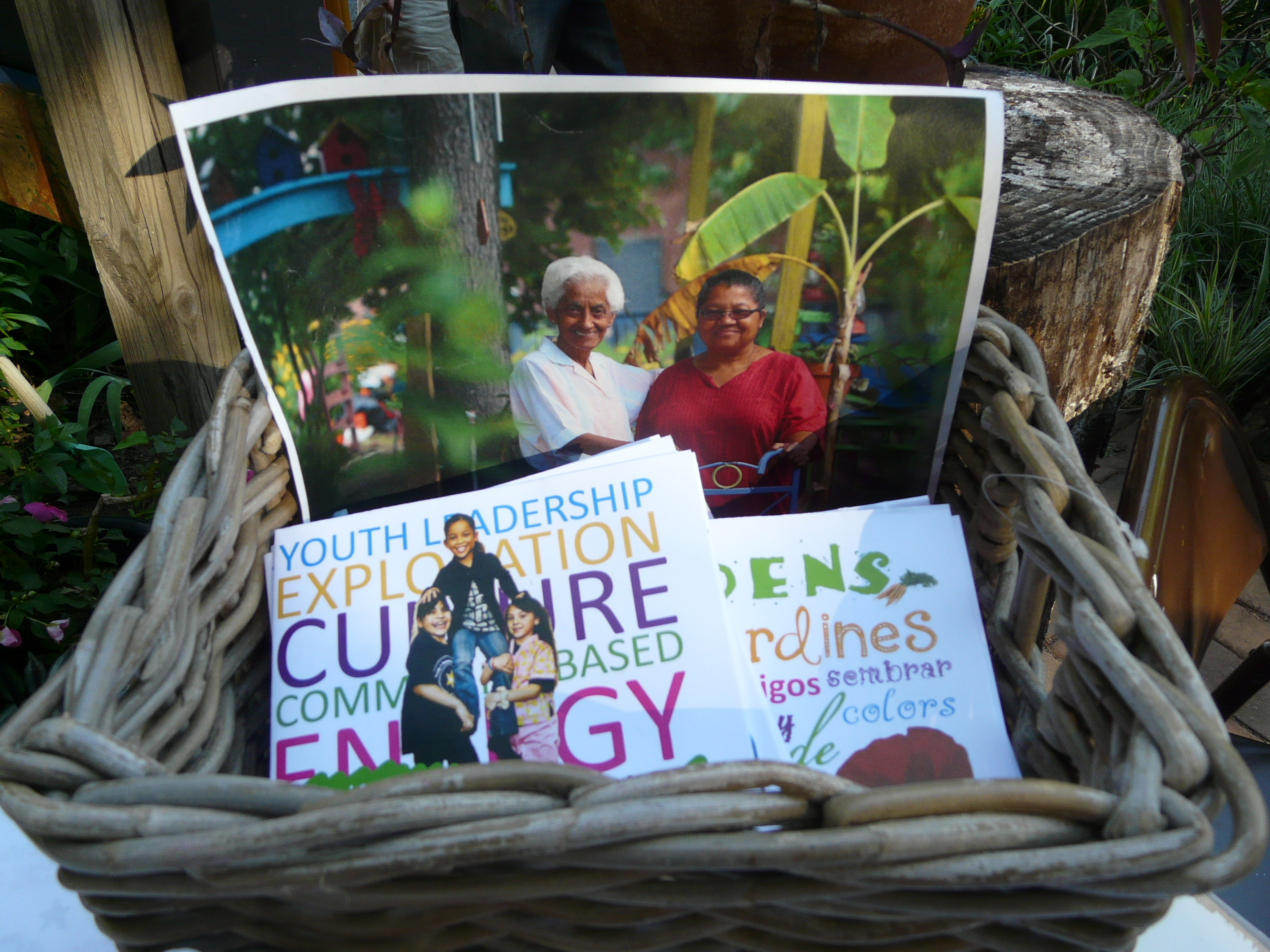
Tomasita Romero and Iris Brown are photographed.
For decades, Iris Brown has been instrumental in promoting the African influence in Puerto Rican culture. In a city which is racially and ethnically diverse, just a few blocks away, the community is predominately African American. Norris Square’s goal – aside from youth development, sustainable farming and community engagement – is to bridge the gap between these two communities.
“We’re more connected than we think,” says Álverez, who is Puerto Rican. “It’s very important to look at the African Diaspora within Puerto Rico and talk about how much it influences this entire culture, from the way we eat to the music we listen to.”
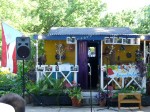
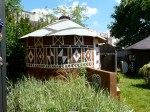
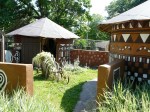
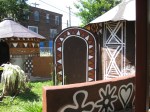
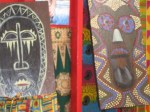
In recognition of Africa’s influence , Norris Square has created The Villa Africana Colobó, a small African village in one of its garden spaces. It has brightly colored huts and interior walls are decorated with African masks. During the the Festival de Bambulaé, instrument making and leaf printing instruction were available to attendees.
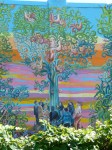
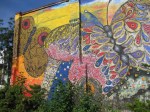
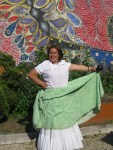
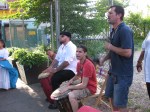
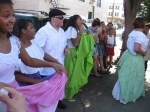
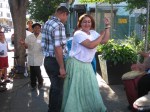
Across Palethorpe Street, there is another garden called El Batey with grapes growing above an arbor and an enormous colorful butterfly wall mural. There are Bomba dancers from two troupes. Members are young and old, swishing their colorful skirts, swaying their hips, tapping their feet and rhythmically beating drums. Bomba is a traditional Puerto Rican dance whose origins trace to enslaved Africans on the island.
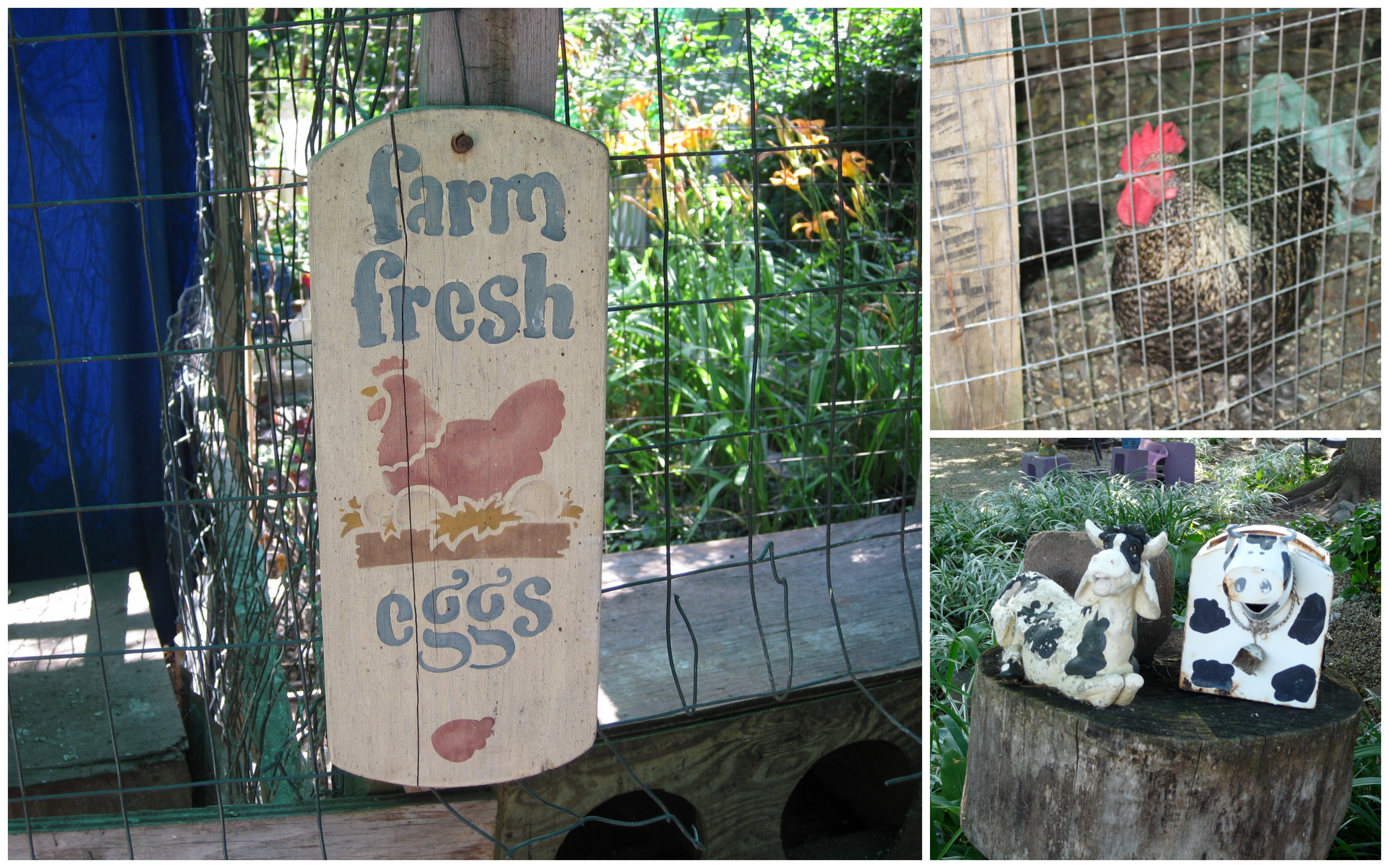
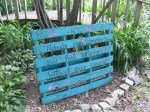
The chicken coop and other sites at the garden in Las Parcelas.
Maribel Lozada from Philareyto Dance describes the beauty of Bomba saying, “No hay mucho coreografía ; es más de sentido y como tu sientes.” Lozada has been teaching Bomba to neighborhood kids for decades, carefully explaining Bomba’s “influencia Africana.”
Her granddaughter was one of the dancers who performed with her in El Batey at the Festival. And Guillermo — who is only 10 years old, but has been Bomba dancing for nearly four years — sits with Lozada echoing his love for the dance and the confidence it gives him. He says, “I like that I kind express myself, my movement and just be me.”
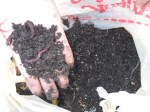
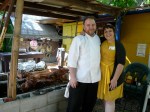
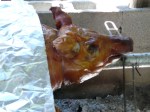
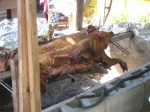
Back in Las Parcelas, beyond the guitar player and lessons on composting with worms, people are touring the garden space and feasting upon Napoleon, the pig who was roasted for six hours by McGowan’s husband, Nat, who happens to be a chef.
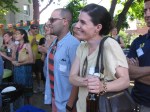
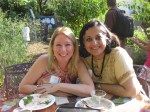
Two women munching happily at a table across from an oregano garden work at the PHS. They’ve come here every year since the late 1980s. And PHS has had a strong partnership with Norris Square Neighborhood Project for decades.
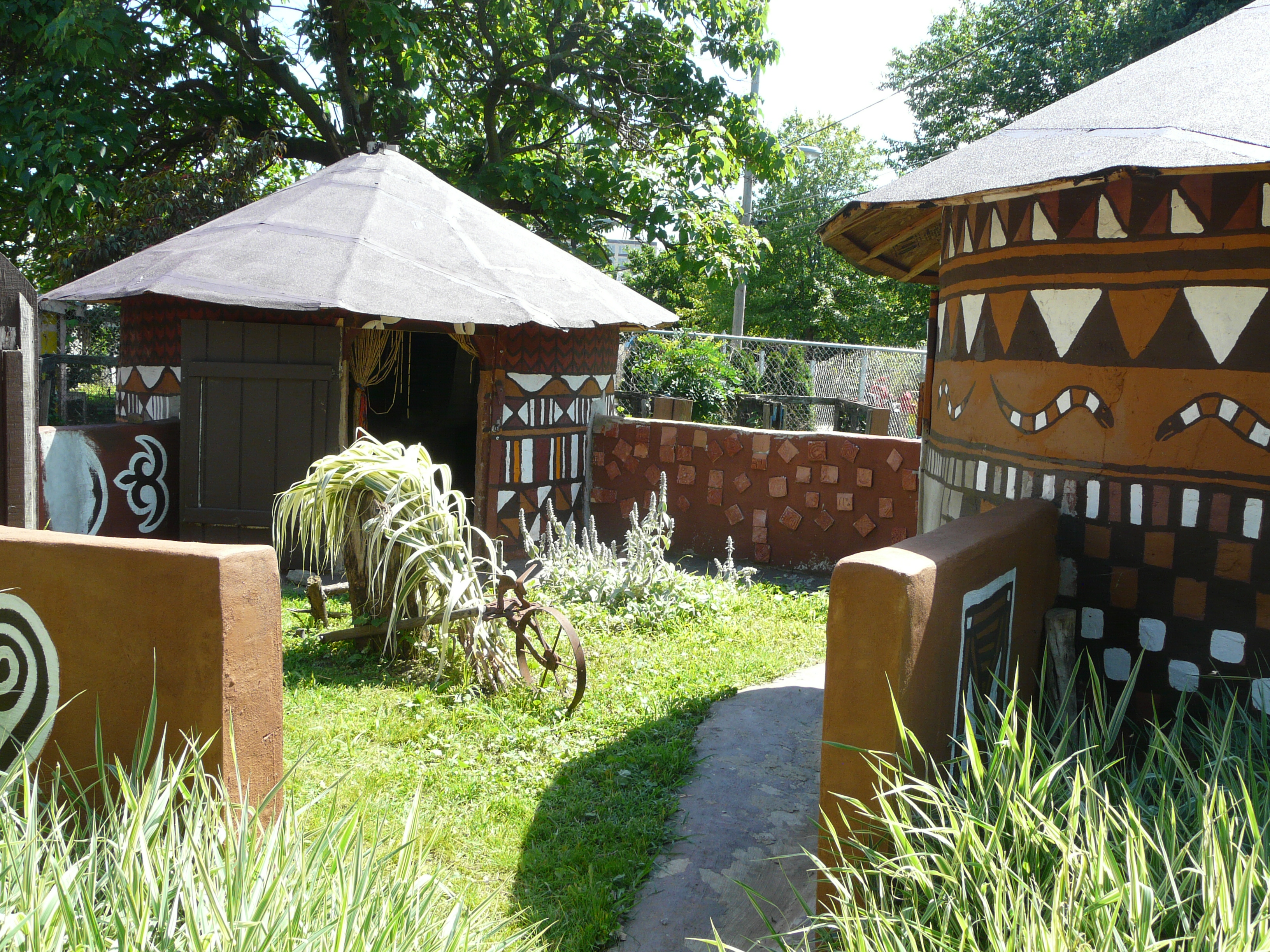
The Villa Africana Colobó
“PHS was right there at the beginning. And I think it’s one of the things we’re most proud of. This is why we do this,” says Lisa Stephano. She says of Norris Square, “I think the way they engage children, young people, and give them such meaningful skills and a place to really be together and get a sense of community is really special.”
“I think the gardens really did transform this entire community,” adds Maitreyi Roy who says that Las Parcelas is her favorite garden in the entire city. “They gave a sense of community.”
In the five years that McGowan has been Executive Director, the Norris Square Neighborhood Project has developed its youth program, which boasts impressive high school graduation rates in a community where less than 70% of boys graduate. Now they’re turning all their energy to these gardens. This Festival will raise money to help Norris Square develop community stewardship and cultural preservation. And through generous donations – given over the decades to create and maintain this program – Norris Square can throw movie nights and happy hours and plant more fig trees.
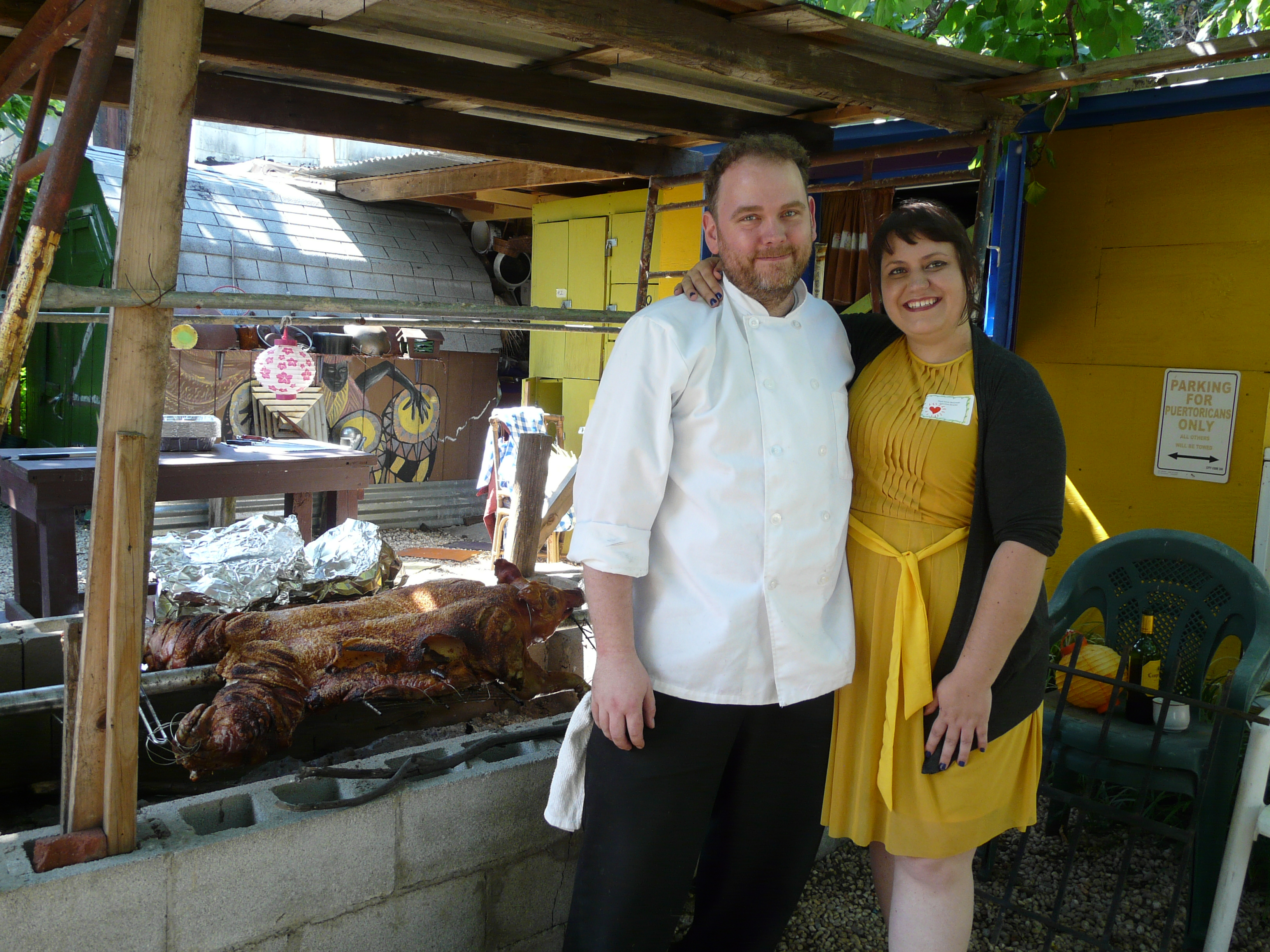
Reed Davaz McGowan and her husband Nat
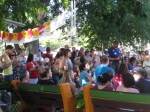
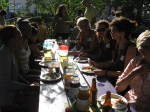
Around 7:00 p.m., the festivities for the Festival were well under way. People are huddled beneath the fig trees and pear trees with plates of mango salsa, chicken and Napoleon the pig in all his delicious glory.
Out on Palethorpe Street, which is blocked off for the event, neighborhood children are seen playing basketball, riding bikes and drawing with sidewalk chalk. A man named Modesto is here with his two sons. He works for Taller Puertorriqueño, a Philadelphia Latino arts and culture institution, and his wife serves on Norris Square’s Board of Directors. They come here every year to celebrate their culture and to support the work of Norris Square Neighborhood Project.

Modesto and his son drawing with sidewalk chalk.
His son Sebastian is drawing a robot with blue, green and yellow chalk. He’s drawing in the middle of a street in North Philadelphia, which wouldn’t have been possible years ago. It feels safe now.
He begs his father for more colors. And he’s earned them; after all, he spent his morning weeding the gardens of Las Parcelas. It’s already become his second home.
The Festival de Bambulae raises money to help Norris Square Neighborhood Project develop community stewardship and cultural preservation. Visit their site for more information and ways to help. You can also “Like” them on Facebook.




Kim Haas, President of Haas Media LLC and Founder of Los Afro-Latinos, will be speaking at America Means Business (AMB) tomorrow, Wednesday, June 13 from 2:00pm – 3:00pm.
Kim will talk about launching and growing her business, as well as developing Los Afro-Latinos. Her interviewer will be Ramon Ray, Editor of Small Biz Technology.
The event takes place at America Means Business headquarters (125 West 18 Street, New York, New York).
For more information about this event and to get tickets please click here.
Tune in TODAY at 2:30pm to WRFG-Atlanta to hear Kim Haas (President of Haas Media LLC and Founder of Los Afro-Latinos) on “The Tambor” with host Bruno Gaston! Read more
By Kim Haas
Part Two of Los Afro-Latinos La Toma Feature
Here we invite you to listen to the interview with Francia Márquez and Clemencia Carabali in Spanish.
Aquí les invitamos escuchar la entrevista con Clemencia Carabali y Francia Márquez en español.
Have you ever felt so committed to a cause that you were willing to risk your life defending it? For most of us, it’s hard to imagine being so strongly dedicated to an ideal, principle or mission. Read more
Part One of Los Afro-Latinos La Toma Feature
Today’s headlines are focused on Colombia. Stories regarding the U.S. Secret Service’s prostitution scandal in Cartagena during last month’s Summit of the Americas have brought the South American country to the forefront of international news.
But the scandal you’re not hearing about revolves around La Toma, a small Afro-Colombian community in Cauca, a gold-rich, mountainous region in Colombia’s Pacific southwest. With the price of gold soaring, foreign mining companies are swooping in and forcing out the Afro-Colombian community that has inhabited La Toma for centuries and used small-scale mining for sustenance. Read more





 Los Afro-Latinos