Skip to content

Posts by losafrolatinos

Exploring Venezuela’s African History with Evelyne Laurent-Perrault

by Nicolle Morales Kern

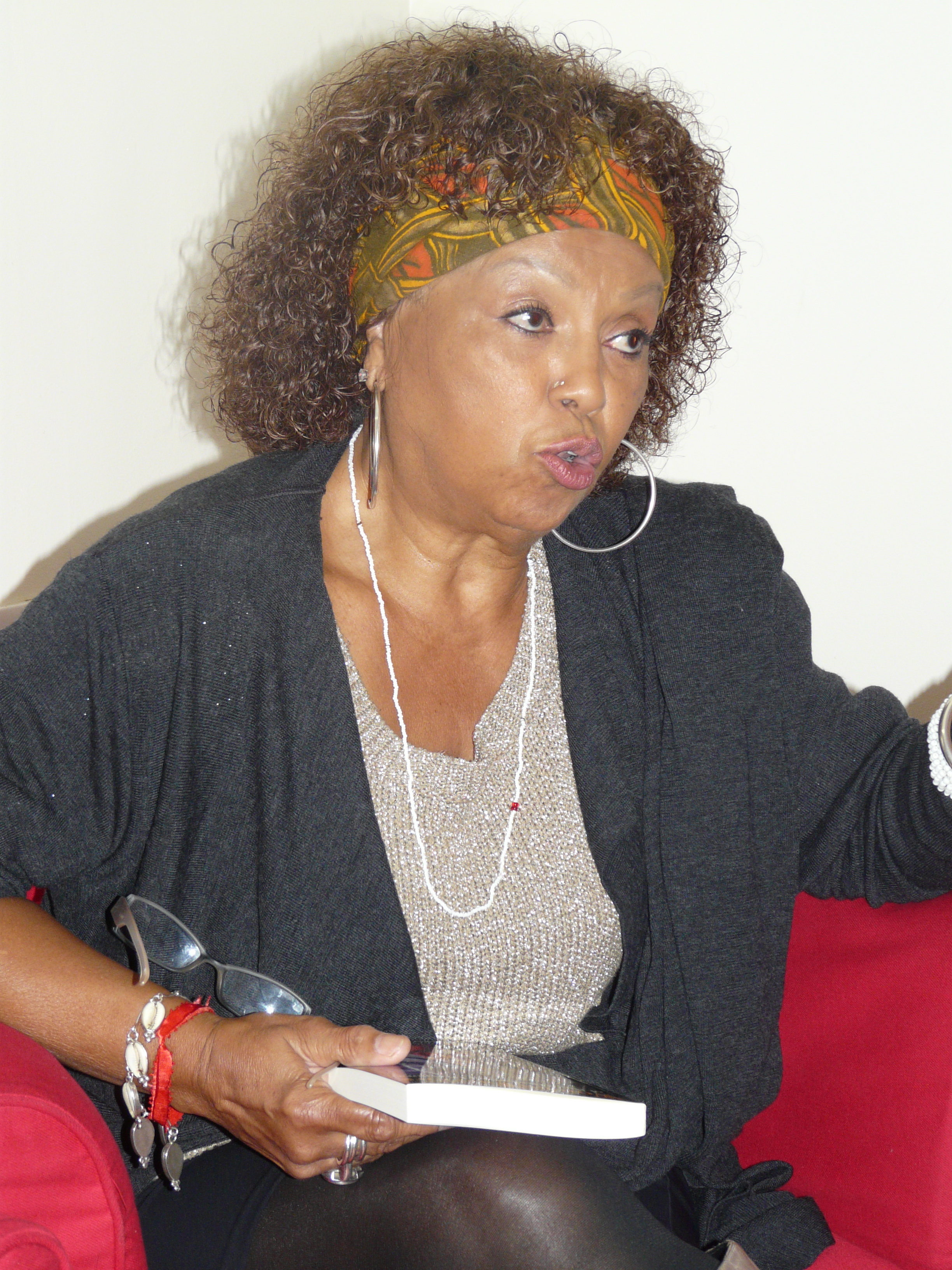
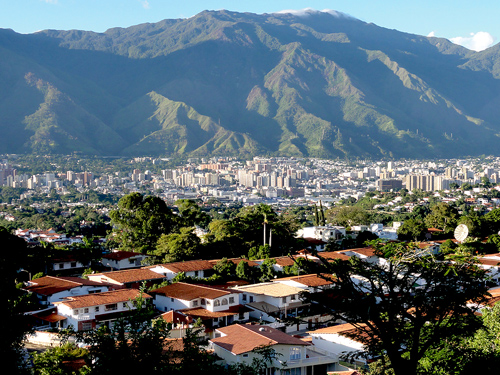
Evelyne Laurent-Perrault was born to Haitian and Venezuelan parents in Caracas, Venezuela, a city she loves for its beauty and the warmth of its people. Evelyne’s father was an engineer and her stepmother was a pharmacist. She grew up in an area of Caracas where few people looked like her family, and her peers perceived her as a minority. Evelyne described the experience as “a double-edged sword, an illusion of inclusion, but the inclusion had its limits.”

While growing up, she didn’t have the language to describe her situation nor was she able to express the range of emotions she felt in a world where being black was not appreciated. Yet, something changed when her Licenciatura degree in Biology, from the Universidad Central de Venezuela, led her to an internship at the New York Zoological Society. As part of the internship, she lived in South West Cameroon working in wild life conservation. During her African sojourn Evelyne witnessed many cultural similarities between Africans and Venezuelans.
For example, in Venezuela, when someone asks you where something is, you don’t point with your finger to show them, you signal with your lips; a custom also common in some parts of Africa. Another example can be found in expressions used. While engaged in conversation with a friend from Angola, Evelyne used the phrase en fua, describing when something comes to an end. Her African friend understood the term, defining it in his language, Kikongo, as meaning dead.

It was this and other experiences that helped her realize that African contributions in Venezuela were deeper than she initially thought. These contributions aren’t taught in Venezuelan schools. For instance Venezuelan schools recognize September as the month devoted to celebrating both Columbus Day and Spain as Venezuela’s mother country.

With the weight of those experiences, Evelyne hasn’t stopped questioning what and how the story of Africa is told. Her dissertation, as a PhD candidate at New York University’s History Department- African Diaspora program, explores the intellectual contribution of Afro-descendants in Caracas-Venezuela, during the end of the colonial period, 1770-1810. A topic she chose “because this was the last stretch of the colonial period, a lot of changes took place at that time, but I thought that this moment represented also the zenith of people of African descent’s demands.” Read more

Christina Mendez Rocks the Runway

Our February article for Being Latino focuses on Christina Mendez, model, advocate for Autism Speaks, and granddaughter of Joseito Mateo.

Christina Mendez loves to perform. She’s bubbly and warm. And when your grandfather is the greatest merenguero in Dominican Republic history, it might be safe to say that performing runs deep in your blood.

Christina was an aspiring singer as a teenager, performing in the school choir. Interestingly, merengue was never part of her repertoire. Perhaps, because she’s lived her entire life on New York City’s Upper West Side, in a neighborhood where the name Joseito Matteo probably would not have carried much weight.

However, she is quick to point out that if she had grown up just a few blocks north in Washington Heights, the epicenter of Dominican culture, she almost certainly would have been inundated with “free cake, free everything.” At age 92, no other Dominican singer is more revered than Joseito Matteo.

While Christina is exceptionally honored by her family’s musical legacy, “I’m always proud of his (her grandfather’s) success,” she never wanted to ride the coattails of her famous grandfather. She is charting her own course but her journey to the ascendency of Plus Size modeling has taken a few detours.

When I was in school, I had a problem with cutting class. They couldn’t keep me in school. I was a hot mess. It was hard to control me,” says Christina. It took a clever Spanish teacher, Jose Melendez, to keep her in the Humanities High School building. He tempted her with opportunities to model in after school fashion shows in an effort to keep her and her friends from being truant. Christina describes Mr. Melendez’s approach to the catwalk, “He hit the runway like he was Naomi Campbell; he taught us how to walk the runway.” Christina was hooked and continued to model. Inspired, she graduated from high school and enrolled at Atlanta’s Morris Brown College, one of the United States’ historically black colleges.

As she recounts, Christina selected Morris Brown for two main reasons: First, “I love black people…. I consider myself a Black Latina. I don’t fit the standard look  (Latinas in the media). My grandfather is very dark and my mother is very dark. My mother had a lot of issues about being black. She has said statements like, ‘You are light. You are going to get more opportunities.’ And I would say, I love your color. I tan to be your color. You are crazy. You look great.” Second, Christina wanted to live as far away from home as possible, spread her wings and be independent.

Read the full article on Being Latino.

This slideshow requires JavaScript.

Black Latina: The Play (A Life and Work by Crystal Roman)

by Kim Haas

A few weeks ago,  I spoke with actress and playwright Crystal Roman. Days after our interview, I sat in the audience viewing her theatrical production Black Latina: The Play.

The feeling of being “Too black for Latinos and too Latino for blacks” is a sentiment not lost on Crystal. In a case of art imitating life, she penned her experiences as a Black Latina in a play that addresses many of her struggles and triumphs. Read more

Elio Villafranca’s Piano Lesson

Our January article for Being Latino focuses on Elio Villafranca, a Grammy-nominated Afro-Cuban Jazz pianist.

To say that Elio Villafranca is a jazz pianist doesn’t quite capture the enormity of what the piano represents to him. For Elio, playing the piano is the embodiment of his soul. It lies at the core of who he is.

In his words, “It’s a liberation, piano is like my other half. It’s true, it’s not a cliché. When I get to play the piano, I feel one half already full, but if I do my things (daily routine) and I haven’t played the piano, I feel completely half empty, unbalanced.”

Elio is quite centered, disciplined and gracious. With years of classical piano training in his homeland, Cuba, and a daily practice routine of at least four hours, Elio Villafranca has earned the distinction of being at the vanguard of the current generation of Cuban pianists and musicians developing an international modern jazz sound.

His most recent album, Dos y Mas, is a piano and percussion collaboration with fellow Cuban musician Arturo Stable. Released last year to great critical acclaim,  Dos y Mas honors the musical heritages of Latin America, the Middle East, Africa, Spain and Cuba. Read more

Ynanna Djehuty’s Path to Identifying as an Afro-Latina

by Nicolle Morales Kern

The journey to self-discovery can be a long one, often involves exploring outside of the boundaries provided by family, and can lead to a new identity.

Such is the case for Afro-Dominican poet, writer, and birth doula Ynanna Djehuty (born Carmen Mojica). Born and raised in the Bronx, New York, Djehuty didn’t start referring to herself as Afro-Dominican until she started researching her heritage at the State University of New York at New Paltz, where she studied Black Studies and Television/Radio Productions. On this journey, she realized that there was a part of herself that she hated.

“The community in U.S. doesn’t like to recognize African heritage. I can only guess that in the Dominican Republic it might be the same. In the U.S., there is a clear black and white line; our society doesn’t understand there is a mix of things and you have to define if you’re black or white, and when I was growing up I didn’t realize that was happening, and always saw white as better.”

During her last semester in college, Djehuty took a class on Women in the Caribbean, which not only focused the racial aspects, but on the entire experience of women and how colonization has impacted their lives. After reading the article Latinegras: Desired Women – Undesirable Mothers, Daughters, Sisters and Wives by Marta Cruz-Janzen, she recognized who she is and how she feels about herself. As a result, Djehuty wrote a 20-page paper on the Afro-Latina identity. One thing she discovered during her research is that there are not many voices contributing to the subject.

“I decided I wanted to add to the voices of Afro-Latinas, to share information with other Afro-Latinas who don’t have words for their experiences,” says Djehuty on her decision to write her first book Hija De Mi Madre (My Mother’s Daughter), published in October 2009. The book is “a combination of memoirs, poems and research material that explains the effects of race on identity from an academic standpoint. She shares her personal story as a metaphor to place a common cultural experience into context.” Read more

Chef Eddie Cotto: A Missionary for Puerto Rican Cuisine

Our December article for Being Latino focuses on Chef Eddie Cotto, owner of the restaurant Me Casa in Jersey City. 

Chef Eddie Cotto

Chef Eddie Cotto

“I’m here because I love to cook.” To say that Chef Eddie Cotto is passionate about Puerto Rican food is an understatement. He’s on a mission, plate by plate not just to change, that’s too simple, but to revolutionize how Americans view his familial cuisine.

The Brooklyn born and raised former financier says, “I dream big, never small.” 

Chef Cotto aspires to see Puerto Rican food as ubiquitous as Mexican and Cuban food is throughout the United States. According to him, Puerto Ricans have not tooted their horns loud enough and have fallen short marketing their cuisine to a crossover audience as Mexicans and Cubans have. “Have we really made a mark on the world, culinarily, to really claim our spot? That’s where I think we haven’t.” The result, according to Chef Cotto is that many Americans identify and categorize Latino cuisine as either Mexican or Cuban. Read more

Exploring Mexico’s African Heritage with Dr. Marco Polo Hernández

by Nicolle Morales Kern

“We need to look deeper into our Africanness to understand ourselves,” says Dr. Marco Polo Hernández, a professor of Spanish and Afro-Hispanic studies at North Carolina Central University, in a recent phone interview. Mexico’s African heritage is not normally discussed or highlighted in conversation, or even education. But, Dr. Hernández, who holds a Ph.D. in Hispanic and Italian Studies from the University of British Columbia, a M.A. in Spanish Language and Peninsular and Latin American literatures, and a B.A. in General Studies & Spanish language and literatures from Portland State University, says that is slowly starting to change. Read more

Learning from “Women Warriors of the Afro-Latina Diaspora”

Dr. Marta Moreno Vega has been leading the charge for Afro-Latino recognition and cultural identity for decades. As Founder of New York City’s Caribbean Cultural Center’s African Diaspora Institute, she has a distinguished career as an activist, scholar and filmmaker advocating for Afro-Latino issues.

Marta Moreno

Dr. Marta Moreno Vega

Read more

Chef Maricel Presilla’s Food of the Gods: An Ode to Afro-Brazilian cuisine

Hoboken chef Maricel Presilla has been someone I’ve been eagerly trying to meet for several years. Actually, it all started when I was thumbing through the December 2007 issue of Saveur Magazine and came across the article she penned, Food of the Gods.

Her food commentary was a refreshing look at Salvador da Bahia’s (Brazil) vibrant cuisine which is an “expression of the region’s rich spiritual life.” Salvador, the city of three million, lies one thousand miles north of Rio de Janeiro, is the heart and soul of Brazil’s black population.

Hundreds of years ago, Salvador and so many European territories enjoyed great economic prosperity due to free African labor. According to chef Presilla, “In the 17th and 18th centuries, millions of Africans were moved through the port of Salvador to be put to work on the vast sugarcane plantations…” She adds, “Some were Bantu tribes people from central and southern Africa: others came from the Yoruba kingdoms of West Africa and carried with them a complex spiritual system based on a belief in divinities (called orixás in Portuguese) that were endowed with highly specific powers and personalities. Though many slaves converted to Catholicism, they often retained the core aspects of their ancestral religion, namely, their allegiance to the orixás. Eventually, the mingling of these belief systems gave rise in Bahia to Candomblé, a religion that continues to be practiced by millions of Brazilians today.”

Saveur, the ultimate foodie magazine, devoted 14 pages to the article. Chef Presilla’s visit to Salvador and quest to immerse herself in authentic Bahian cuisine uncovers an interesting connection – the bond between the secular and the sacred. She writes,“Feasting is an essential part of Candomblé and is linked with the tradition of offering food to the orixás who are believed to have well-defined cravings. For example, Oxala, Candomblés, supreme, Zeus-like god, prefers plain, unsalted white rice; Oxum, the sensual Aphrodite-like goddess who rules the rivers, has a predilection for more-seasoned dishes, such as xinxim de galinha, a chicken stew made with dendê oil; and Iansã the female thunder goddess, demands acarajé” (deep fried fritters made from black eyed peas). Read more

Music to lift the spirits [giveaway]

We know that Hurricane Sandy has brought a great deal of devastation to so many communities. As a result, we hope that we can bring you a bit of sunshine through music. Even on the darkest days, music has the power to inspire, uplift and transport.

To help lift spirits, we are giving away – 4 copies of Multiverse, the latest release from Afro-Cuban Jazz Musician, Bobby Sanabria. Last month, Multiverse was nominated for a Grammy in Best Latin Jazz Album Category.

Soon, we will be sharing the interview with the masterful Bobby Sanabria. Until then, play a little music and send good thoughts to those in need.

Giveaway Rules

1. Either follow/ subscribe to our blog here on WordPress or like us on Facebook.

2. Leave a comment below why you would like to win one of Bobby Sanabria’s CD’s.

This giveaway will end Thursday, November 8 at Midnight (EST), and the winners will be selected using random.org’s number generator and announced on Friday, November 9.